IT Infrastructure Components
IT Infrastructure Components - The Backbone of Modern Business Operations
IT Infrastructure:
Definition: IT infrastructure refers to the composite hardware, software, network resources, and services required for the existence, operation, and management of an enterprise IT environment.
Importance: IT infrastructure supports business processes, enables communication, and facilitates data management and analysis.
IT Infrastructure Components:
Hardware
Software
Networks
Data Centers
Cloud Services
Security
Hardware
Servers: Powerful computers that store and process data for multiple users.
Workstations: Personal computers used by employees.
Networking Devices: Routers, switches, and hubs that manage data traffic.
Peripheral Devices: Printers, scanners, and external drives.
Software
Operating Systems (OS): Software that manages hardware and software resources (e.g., Windows, Linux, macOS).
Applications: Software designed to perform specific tasks (e.g., MS Office, Adobe Suite).
Middleware: Software that connects different applications and allows them to communicate.
Networking
Local Area Network (LAN): Connects computers within a limited area.
Wide Area Network (WAN): Connects computers across larger geographical areas.
Internet: Global network of interconnected networks.
Intranet: Private network accessible only to an organization’s staff.
Data Storage
Storage Area Networks (SAN): High-speed network that provides access to consolidated block-level storage.
Network Attached Storage (NAS): Dedicated file storage that enables multiple users to store and retrieve data.
Cloud Storage: Online storage solutions (e.g., Google Drive, Dropbox).
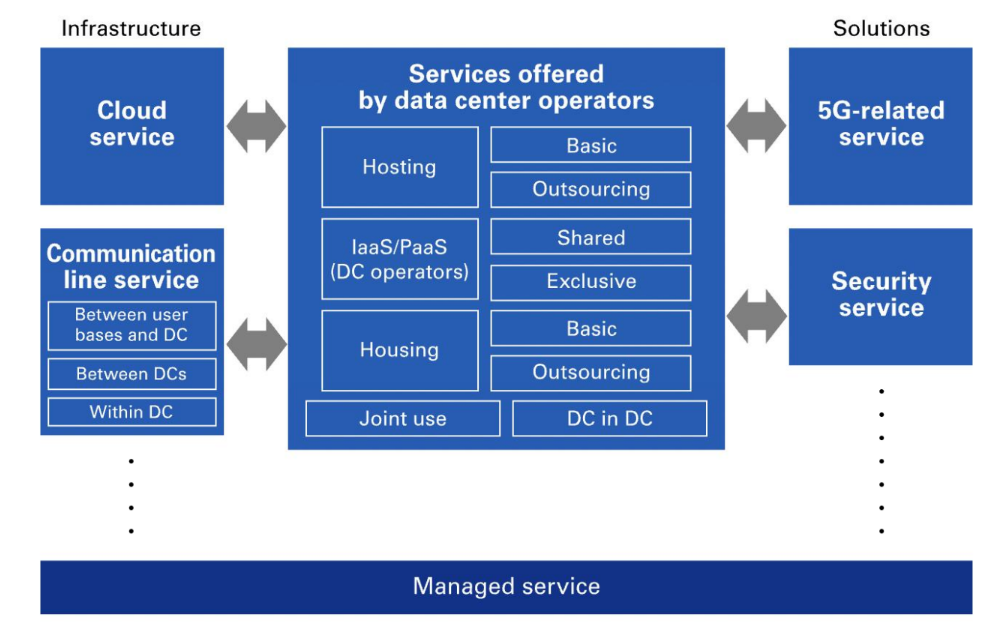
Data Centers
Definition: Facilities used to house computer systems and associated components.
Components: Servers, storage systems, backup power supplies, and climate control systems.
Importance: Centralized locations for data processing and storage.
Cloud Computing
Service Models
Software as a Service (SaaS)
Platform as a Service (PaaS)
Infrastructure as a Service (IaaS)
Characteristics
On-demand self-service
Broad network access
Resource pooling
Rapid elasticity
Measured service
Deployment Models
Private Cloud
Community Cloud
Public Cloud
Hybrid Cloud
Security Solutions
Firewalls: Network security devices that monitor and control incoming and outgoing traffic.
Antivirus Software: Programs that detect and eliminate malicious software.
Encryption: Process of encoding data to prevent unauthorized access.
Intrusion Detection Systems (IDS): Monitor networks for suspicious activity.